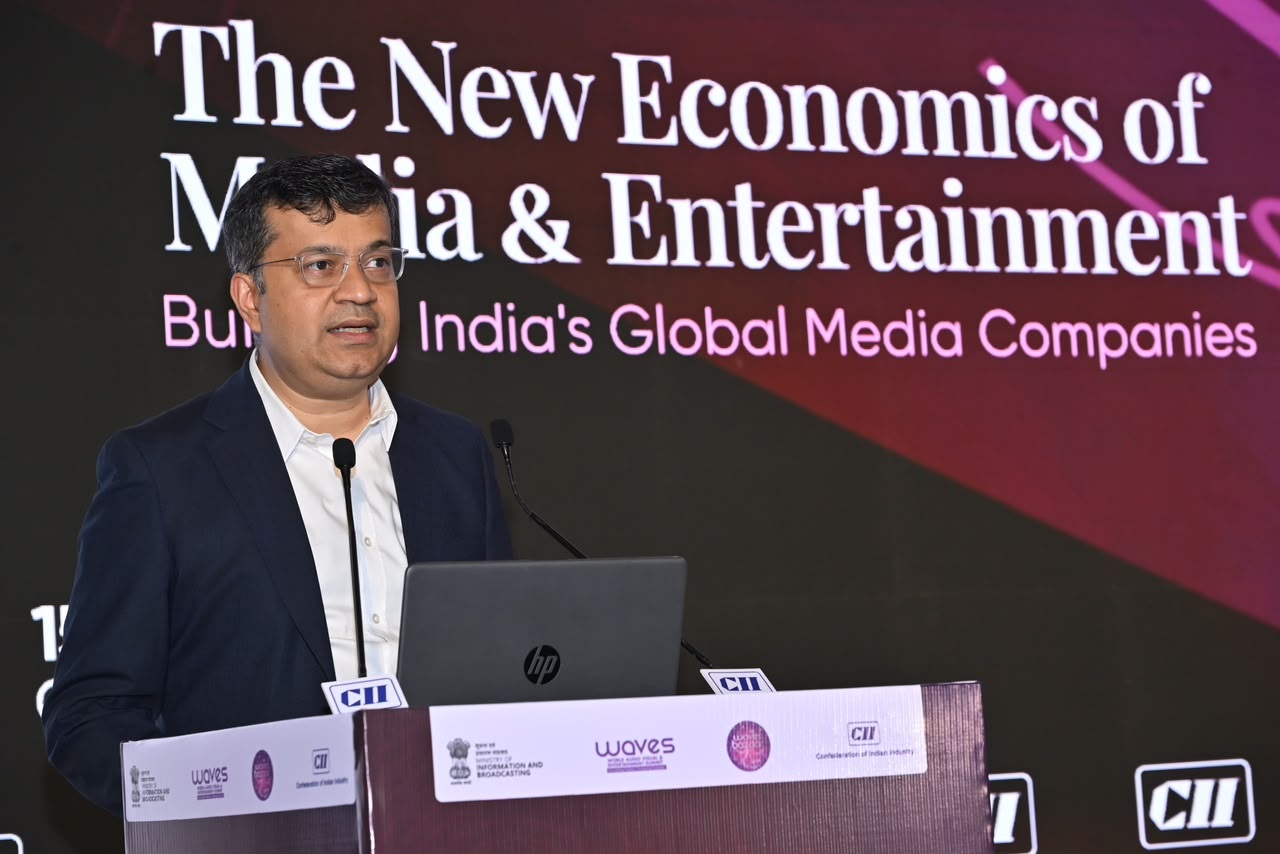
Indian media and entertainment business models need a fundamental rewrite, says Gaurav Banerjee, CEO and MD Sony Pictures Networks India (SPNI). Calls for stronger Indian IP, systematic talent development and sustainable economics; says AI must enable creativity and never replace the creator’s voice
India’s media and entertainment industry must fundamentally rethink its business models to turn its vast audience reach and creative strengths into sustainable economic value, Gaurav Banerjee, Chairman, CII Media and Entertainment Committee, and Managing Director and Chief Executive Officer, Sony Pictures Networks India, said at the inaugural session of the CII Big Picture Summit.
Addressing industry leaders and policymakers, Banerjee said the summit’s theme, “The New Economics of Media & Entertainment”, reflected an urgent challenge facing the sector: building an industry that is more innovative and more valuable for audiences, creators and investors.
“Today, more than at any other time in the past, economic and business models are under stress. They require a fundamental rewrite,” Banerjee said. “A large audience is, finally, just a starting point. It is not a business model.”
He said chasing reach alone had not delivered the best economics and urged the industry to focus on the value it creates through that reach. Viewers need entertainment worth their time and money, advertisers need credible evidence of business outcomes, and investors need confidence that creative ambition can deliver sustainable, long-term returns.
Making the case for a more systematic approach to creative development, Banerjee drew on the IPL’s talent scouting and coaching model. He asked what it would take to build an equivalent system for Indian storytellers, with stronger pathways for discovering talent, developing skills and widening access to opportunity.
“What would it take to do that for our entertainment storytellers? How can this forum, CII, policymakers and companies like ours make that process bigger, better, more systematic and better organised?” he said.
Banerjee also called for a reset in how the industry invests in intellectual property. India’s programmes, films, characters and formats have become part of its cultural memory, he said, but the industry must ask whether it is capturing their full economic value.
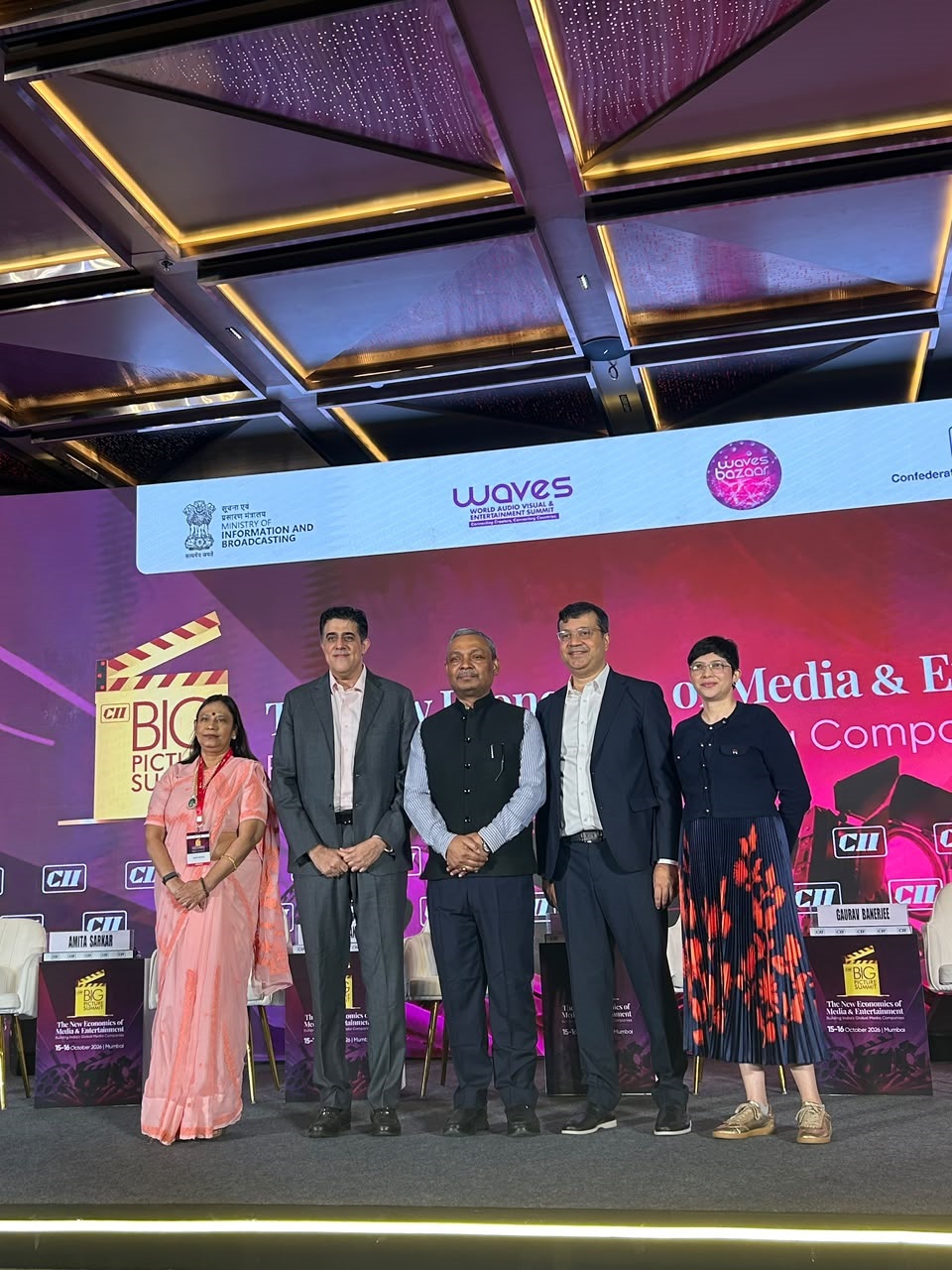
He urged businesses to build franchises that can endure across decades, travel across languages and global markets, and extend across television, streaming, cinema, live experiences and licensing. This would require stronger development, research-led writers’ rooms and partnerships that help Indian IP reach new audiences, alongside fair rewards for creators and respect for rights.
As viewing moves across screens, Banerjee said measurement and monetisation systems must evolve to provide a more coherent understanding of reach, engagement and outcomes. Greater industry collaboration could give advertisers stronger, evidence-backed confidence in the value of their investments.
On artificial intelligence, he urged the sector to look beyond production efficiencies and use the technology to deepen research, development and creative discovery.
“My concern is that AI should not be used simply to reduce costs thoughtlessly. It must never be used to replace the voice of the creator,” Banerjee said. “It should be an enabling function, not a replacement function.”
He outlined three priorities for collective action through CII: a forward-looking framework for intellectual property and responsible AI; talent and skills development in partnership with educators, technology companies and creative businesses; and constructive engagement with government to create a predictable environment for long-term investment and global competitiveness.
“Our opportunity is not simply to serve a large domestic audience. It is to build businesses, franchises, capabilities and talent in India that can create value around the world,” Banerjee said.