
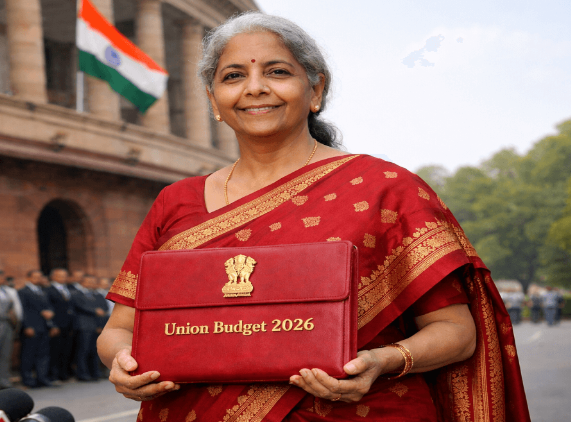
The Union Budget 2026–27, presented by Finance Minister Nirmala Sitharaman, has brought exciting news for travel enthusiasts across India by introducing a major reduction in the Tax Collected at Source (TCS) on overseas tour packages.The Budget didn’t just target economic growth; it also tries towards making dreams of international travels cheaper and more cost effective.
MediaAvataar India tries to attempt the pulse of the industry with reactions pouring in from different quarters.
Aloke Singh, Managing Director, Air India Express
The Union Budget 2026–27 sends a strong and reassuring signal for India’s long-term growth, anchored in fiscal discipline and a sustained push on infrastructure-led development. The continued emphasis on capital expenditure and destination-focused investment provides a solid structural framework for the expansion of tourism and, by extension, the civil aviation sector.
The Budget’s focus on strengthening medical value tourism and destination development is particularly relevant for aviation, as it creates high-frequency, purpose-driven inbound travel, especially from regions such as the Middle East and Southeast Asia. At the same time, the emphasis on developing heritage, archaeological, and eco-tourism destinations across multiple states will stimulate demand for air connectivity to Tier-2 and Tier-3 cities, supporting the next phase of domestic aviation growth.
Importantly, the parallel focus on skilling and professionalising the hospitality and tourism workforce addresses the capacity and service-quality requirements needed to sustain this growth. Taken together, these measures create an ecosystem in which airlines like Air India Express are well positioned to play a meaningful role.”
Giresh Vasudev Kulkarni,Founder of Temple Connect & ITCX International Temples Convention & EXPO on Spiritual Tourism
The move to include temple towns in the City Economic Regions is very bold and appropriate. The allocation of ₹5,000 crore per CER over a period of five years will help modernise infrastructure, fuel local trade and tourism and translate rising visitor numbers into higher transaction value revenues. This, in fact, will turn temple towns into self-sustaining engines of economic growth while maintaining the sanctity and culture of these sacred spaces.The budget allocation is a critical enabler for the CHESS- G doctrine, a six-pronged strategic framework introduced by Temple Connect.
It determines how effectively the model translates from intent to execution across its core pillars. Targeted investment will ensure better convenience infrastructure, hygiene standards, experience design, safety protocols, sustainability integration, and growth activation. We are speaking of economic growth that is centred on inclusion, enabling livelihoods for local communities like artisans, local vendors, e-auto drivers, MSMEs, temple custodians, as well as amplifying local hospitality and temple tourism. This holistic temple-city development is a foundational pillar of a truly Viksit Bharat.
Until now, we were operating like the most organised-unorganised sector. However, the temple ecosystem has a higher scope and needs more financial boost from the various state governments and a higher participation from the Culture and Tourism outfits supporting the cause of Empowered Temple Economy & it’s Ecosystem to become much more organised with targeted allocation, cross-ministerial co-ordinations and structured policy support.”
Jyoti Mayal,Chairperson,Tourism & Hospitality Skill Council
I am pleased to welcome Budget 2026 and delighted to see that several initiatives we had proposed during our meeting with the Finance Minister have been incorporated. The proposal to set up the first-ever National Institute of Hospitality, which I have been advocating for over time and had discussed with the Finance Minister during budget consultations. This initiative will be transformative for hospitality education and skill development, creating a future-ready workforce for India’s growing tourism and hospitality sector.
Reducing TCS to 2% is a welcome, pro-growth move that eases compliance and boosts liquidity, I have been advocating for this since I was the TAAI President & reiterated this in our November meeting with FM, this will make international travel more affordable and bring in ease of doing business is a very positive move, it will boost tourism, encourage global exposure, and benefit both travelers and the travel industry. Coupled with a focus on eco-friendly initiatives and enhanced tourism connectivity, the budget opens new avenues for travel service providers, driving sustainable growth and enriched experiences for travellers
For tourism, the focus on positioning India as a global hub for affordable, high-quality healthcare is visionary. Improved last-mile connectivity to remote destinations will boost tourism, while strengthening spiritual tourism in the North East will attract global pilgrims and foster cultural exchange.
The pilot to train 10,000 guides at iconic destinations, supported by IIMs, reflects a strong commitment to grassroots skilling and enhancing visitor experiences.
Infrastructure development is another positive step, laying the foundation for improved connectivity, economic growth, and long-term sectoral development.
Although the budget includes several positive measures, it’s disappointing that the Tourism Ministry has again not received dedicated marketing funds. India must urgently strengthen its marketing presence, as other countries are investing heavily to attract and position themselves as top tourist destinations.
Hari Ganapathy, Co-Founder, Pickyourtrail
The Union Budget 2026 marks a decisive moment for India’s tourism sector, positioning it as a powerful engine for economic growth, youth employment, forex earnings, and regional development. By viewing tourism as both a cultural and economic asset, the government has laid out a long-term vision to strengthen India’s presence on the global travel map while deepening domestic tourism across regions. By placing tourism at the intersection of infrastructure, skilling, technology, and regional development, the government has acknowledged its ability to shape India’s global economic and cultural footprint while unlocking sustained domestic demand.
The emphasis on experience-led growth—through integrated medical and tourism hubs, the development of immersive heritage destinations, and the expansion of eco- and nature-based tourism- significantly strengthens India’s appeal for international travelers seeking authentic, high-quality, and purpose-driven experiences. These initiatives not only diversify India’s inbound tourism narrative beyond metros and seasonal circuits but also distribute economic benefits more evenly across regions and communities.
Equally important are the structural reforms aimed at strengthening the tourism supply side. The upgrade of the National Council for Hotel Management into a National Institute of Hospitality, the upskilling of 10,000 tourist guides, and the creation of a National Destination Digital Knowledge Grid will elevate service quality, improve global discoverability, and align India’s tourism ecosystem with international standards. This focus on human capital and digital infrastructure is critical for competing with established global destinations.
From an outbound travel perspective, the emphasis on technology-led governance and the reduction in TCS on overseas tour packages meaningfully improve affordability, transparency, and ease of travel for Indian consumers. This supports the rapid growth of India’s outbound market while enabling travel companies to design more personalised, seamless experiences.