
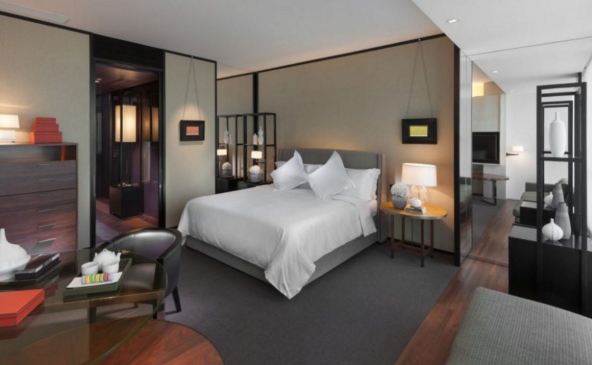
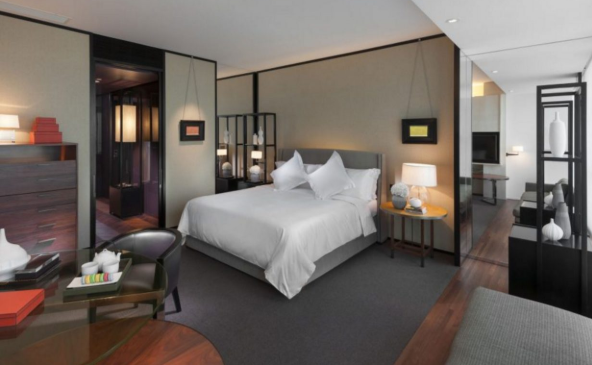
 Luxury advertising is rapidly shifting towards digital media, led by luxury hospitality brands. 50% of luxury hospitality advertising will be digital this year, up from 47% in 2017, according to Zenith’s Luxury Advertising Expenditure Forecasts 2018, published.
Across all luxury brands, 33% of advertising will be digital this year, up from 30% in 2017.
This is the fourth annual edition of the Luxury Advertising Expenditure Forecasts, which examines expenditure on luxury advertising in 23 key luxury markets.* As with Zenith’s long-established Advertising Expenditure Forecasts, it provides historic expenditure figures and forecasts by medium. However, this report focuses specifically on luxury advertising, together with the sub-categories of luxury automobiles, fragrances & beauty, fashion & accessories, watches & jewellery, and – new for this edition – luxury hospitality, which consists of high-end hotels, restaurants, bars and clubs.
Hospitality is substantially ahead of the other luxury sub-categories in its commitment to digital adspend. Consumers in the luxury hospitality category now do most of their research and purchasing online, so brands have shifted their budgets to digital accordingly. Consumers of other types of luxury goods are much more likely to make their final purchase after trying them in person. Zenith forecasts that luxury automobile brands will spend 39% of their ad budgets on digital advertising in 2018, followed by watches & jewellery brands (28%), fragrances & beauty (27%) and fashion & accessories (13%).
Luxury brands have been slower to adopt digital advertising than most brands. Across the 23 markets included in the report, advertisers in all categories spent 39% of their budgets on digital advertising in 2017, compared to luxury’s 30%, and we expect them to spend 42% this year, compared to luxury’s 33%.
Luxury brands have historically been sceptical of the value of the digital environment for conveying their brand values, with its limited ad formats, crowded pages and often poor-quality content. However, the environment has been improved by better ad formats and more high-quality content such as premium video, while programmatic private marketplaces, preferred deals and programmatic guaranteed deals all help brands pick the right content for their messages to appear in.
Digital advertising is now responsible for almost all the growth in luxury adspend. We forecast luxury advertising in digital media to grow by US$886m between 2017 and 2019. Meanwhile television advertising will grow by US$27m, cinema advertising will grow by US$21m, and radio advertising will grow by US$2m. Luxury advertising in newspapers, magazines and outdoor advertising will shrink by US$305m in total, so there will be a net increase of US$631m in luxury adspend between 2017 and 2019. By 2019 we forecast that digital advertising will account for 35% of total luxury adspend.
We expect total luxury adspend to rise 2.4% in 2018 and 2.8% in 2019, below the growth rate of advertising in general. In the 23 markets included in this report, we expect adspend across all categories to grow by 4.2% in 2018 and 3.6% in 2019. Some luxury advertisers are struggling to adapt to the preferences of younger consumers, who often value experiences over material luxuries. Meanwhile, the continued decline of print consumption poses a particular challenge for high-end luxury brands, which still rely heavily on magazines to communicate their brand values.
We divide luxury goods into two types – high luxury (watches & jewellery and fashion & accessories) and broad luxury (luxury automobiles, fragrances & beauty and luxury hospitality). High luxury brands are more exclusive and iconic, and advertise in prestigious media with limited reach, spending 57% of their budgets on magazine advertising in 2017. This proportion is falling, but slowly: we still expect 55% of high luxury adspend to go to magazines in 2019. Broad luxury brands target a wider range of consumers with mass-media advertisers, and spent 41% of their budgets on television in 2017, more than any other medium.
The largest market for luxury advertising is the US, by some distance, followed by China. Luxury brands spent US$5.2bn advertising in the US in 2017, and US$2.1bn in China. These two markets accounted for 61% of luxury adspend across the 23 markets included in the report that year.
China is the most advanced digital market for luxury advertisers, and its lead is increasing. 53% of luxury adspend in China was digital in 2017, and we expect this proportion to rise to 68% by 2019. This rapid shift to digital is being fuelled by luxury brands’ embrace of e-commerce, selling their products directly on platforms like Alibaba’s Tmall, participating in the Singles Day shopping event, and forming partnerships with popular Chinese influencers.
“After a relatively slow start, luxury advertisers are now committing to the digital future, led by luxury hospitality brands,” said Jonathan Barnard, Head of Forecasting at Zenith. “Luxury brands face unique challenges online, such as the need to maintain exclusive brand values while communicating with potential customers at scale. By using personalised digital communications and high-quality e-commerce experiences, luxury brands can generate new sales while preserving their exclusive appeal.”
*The markets included in the report are Australia, Brazil, China, Colombia, France, Germany, Hong Kong, Italy, Japan, Malaysia, MENA, Mexico, the Netherlands, Peru, Russia, Singapore, South Africa, South Korea, Spain, Switzerland, Taiwan, United Kingdom and the USA.