
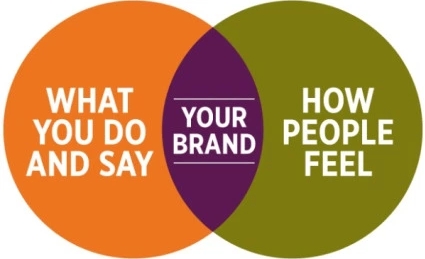
 To date, there has been no accurate or efficient way to measure a brand and its competitors’ overall investment in the consumer experience, or how it affects market share. Our solution to this shortfall is to look beyond share of voice (SOV) to a new metric, namely share of brand experience (BES). Brand Experience is an output which measures the reported importance of each touchpoint in shaping consumer attitudes and influencing consumer behaviour. We use our Touchpoints ROI Tracker tool to monitor trends in brand communication over the full range of paid, owned and earned touchpoints. BES is an improvement on SOV in five key ways:
A holistic measurement that recognises not all touchpoints are equal
Brands could have an identical SOV but very different communication mixes, each used to a very different effect. Brand experience share (BES) considers each individual channel (up to 35, including everything from TV to a recommendation from a friend), and weights the recall of each brand in each touchpoint by how influential the touchpoint is in people’s minds. In doing this, BES accounts for the impact of channels used, as well as how much they are being used.
We measure the channels that matter in the real world, not just to marketers
Rather than using industry-reported spend as an indicator of what has been pushed out in advertising to people, each Touchpoints ROI Tracker study is based on speaking to consumers about what they’ve noticed, and what has actually influenced them when purchasing in a category. This means we consider the activity that resonates with potential customers, rather than just a blanket measure of everything that has been invested in.
BES has far stronger correlation with market share than SOV
As BES data is more granular, comprehensive and consumer focused, it is unsurprising that it has a stronger correlation with market share. For example, for an FMCG category which had 67% correlation between SOV and SOM, our BES analysis found 95% correlation. This suggests that concentrating on growing brand experience – rather than an optimal SOV level – would be more likely to accomplish change, and more effective at doing so.
A proven statistically significant causal relationship
But does correlation definitely mean causation? Using the Dynamic Jones Analysis approach, we have tested the BES correlation over time to prove that it doesn’t just have a better correlation with market share, but an actual effective causation.
From simply setting budgets to indicating the right channel mix
The balance for the marketer is to find a budget-setting approach that is stable and trackable, and yet one that is accurate and accountable. We now have a methodology that extends SOV thinking to a wider set of touchpoints. This enables us to work with clients to evaluate the entire communications ecosystem across paid, owned and earned media, to properly evaluate how consumers experience brands, and provide a direct link to how investment shapes this. Putting consumer brand experience at the heart of budget planning, rather than spend levels, provides an enhanced and more holistic way to build our understanding of how what we do affects the bottom line.
Source:Zenith Media